
What Fast Weight Loss Does To Your Face, And How To Plump And Smooth It Back Without The Clinic Bill
When you lose weight fast, your face deflates: your cheeks go flat, hollows show up under your eyes, and fine lines and wrinkles start to show. Here's exactly why it happens, what the clinic charges to fix it, and the at-home cream that gets the same fuller, smoother look for a fraction of the price.

Read this before you book a clinic appointment. I'm not a dermatologist. I'm someone who finally lost the weight after years of trying, and watched my cheeks go flat and the lines around my face show as it came off. I almost spent $1,800 on filler to fix it. Here's everything I learned about why it happens and what actually plumps and smooths the skin back, so you don't have to find out the hard way like I did.
| The Options | Halo Face Cream | Clinic Treatments | Old Face Cream | Basic Moisturizer | Doing Nothing |
|---|---|---|---|---|---|
| Plumps deflated skin and smooths lines | ✓ | ✓ | ✕ | ✕ | ✕ |
| No appointments, works at home | ✓ | ✕ | ✓ | ✓ | ✓ |
| No "pillow face" risk | ✓ | ✕ | ✓ | ✓ | ✓ |
| Costs a fraction of clinic treatment | ✓ | ✕ | ✓ | ✓ | ✓ |
| Safe to start while you're still losing weight | ✓ | ✕ | ✓ | ✓ | ✓ |
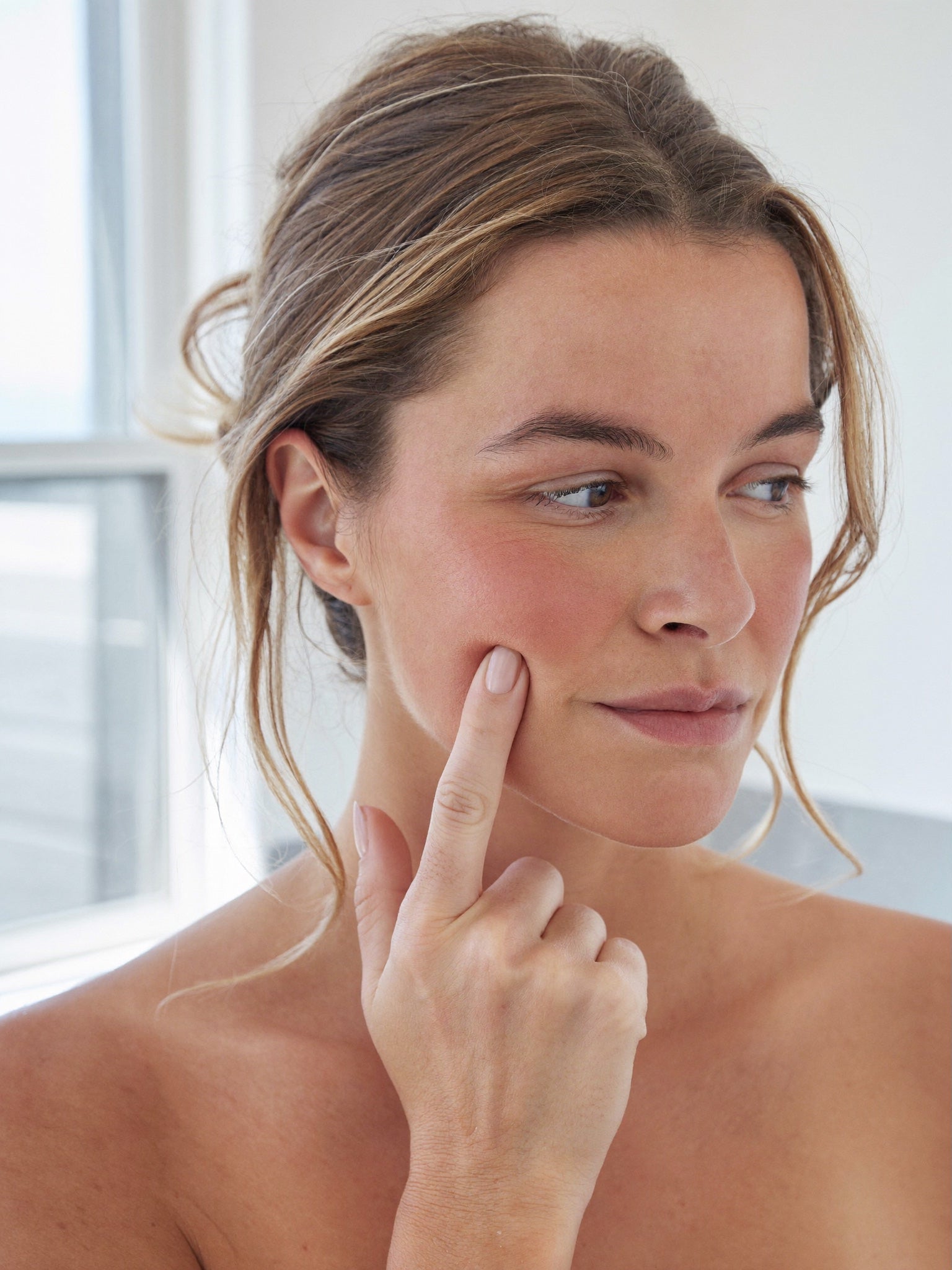
What fast weight loss does to your face.
If you've been losing weight, you may have already started to see it in the mirror. The cheeks look flatter. New hollows show up under the eyes. Fine lines and wrinkles you did not notice before start to show, and the skin along the jaw loosens. You finally got the body you worked for, and somehow your face looks drained doing it.
This is the most common cosmetic side effect of fast weight loss, and almost no one warns you about it. The face is usually the first place it shows, because there is less fat there to cushion the change, and it is the part you look at every day. It can start even before your clothes fit much differently.
Here is exactly what is happening to your face, why the usual fixes do not work, and what actually does.
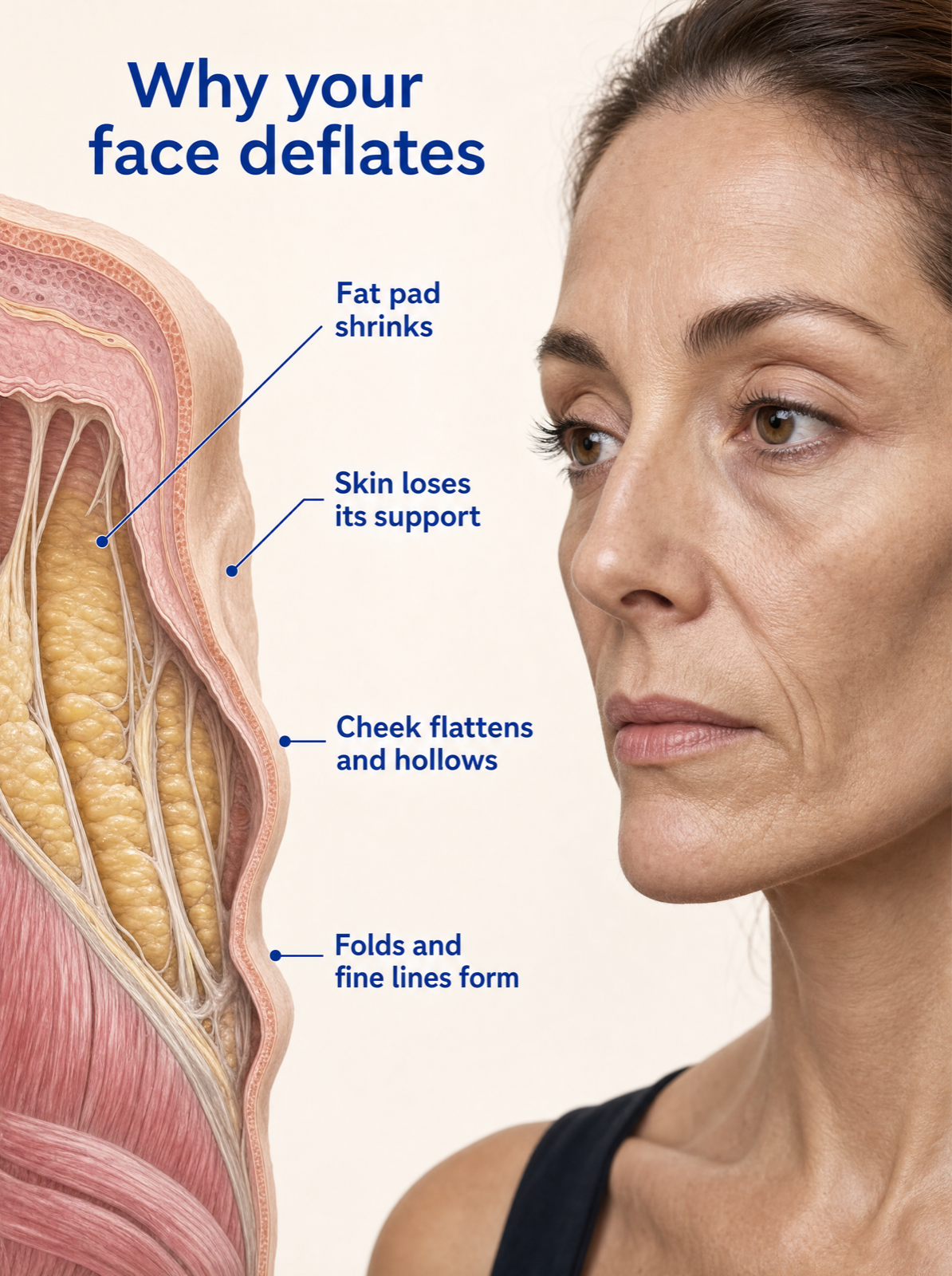
Why it happens: your face loses fat faster than your skin can keep up.
Here is the mechanism. The fullness in a face sits on small pads of fat under the skin. When the weight comes off fast, those pads empty out, often faster than the skin can shrink to match. The skin is left with less underneath it, so two things happen at once: the cheeks go flat and hollow, and with less fat supporting it, the skin creases more easily, so fine lines and wrinkles show up and deepen.
The important part: this is not a dryness problem. A regular moisturizer or "hydrating" cream only adds water to the very surface of the skin. It cannot fill out a cheek that lost the fat underneath it, and it cannot do anything about the lines that come with it. That is why ordinary creams do nothing for this. They were built for a different problem.
Deflated, lined skin has to be plumped and smoothed from within the skin itself, not just coated on top.

The clinic can fix this, and here's what it costs.
To be fair, the clinic can fix a deflated, lined face. Dermal filler, Sculptra, and fat transfer all work. The honest question is not whether they work, it is what they cost and what they ask of you:
- Filler runs about $800 to $1,800 a session, and you redo it every 6 to 18 months. Forever.
- Sculptra is often $2,000 or more across a series. Fat transfer is full surgery, with real recovery.
- On a face that is still losing weight, filler can sit wrong or look overfilled, the "pillow face" people dread, and then you pay again to dissolve it.
So they work. But none of it is something you have to do. You do not need thousands of dollars or a standing set of appointments to plump deflated skin and smooth the lines that came with it. You can get the same look at home, for a fraction, with what comes next.
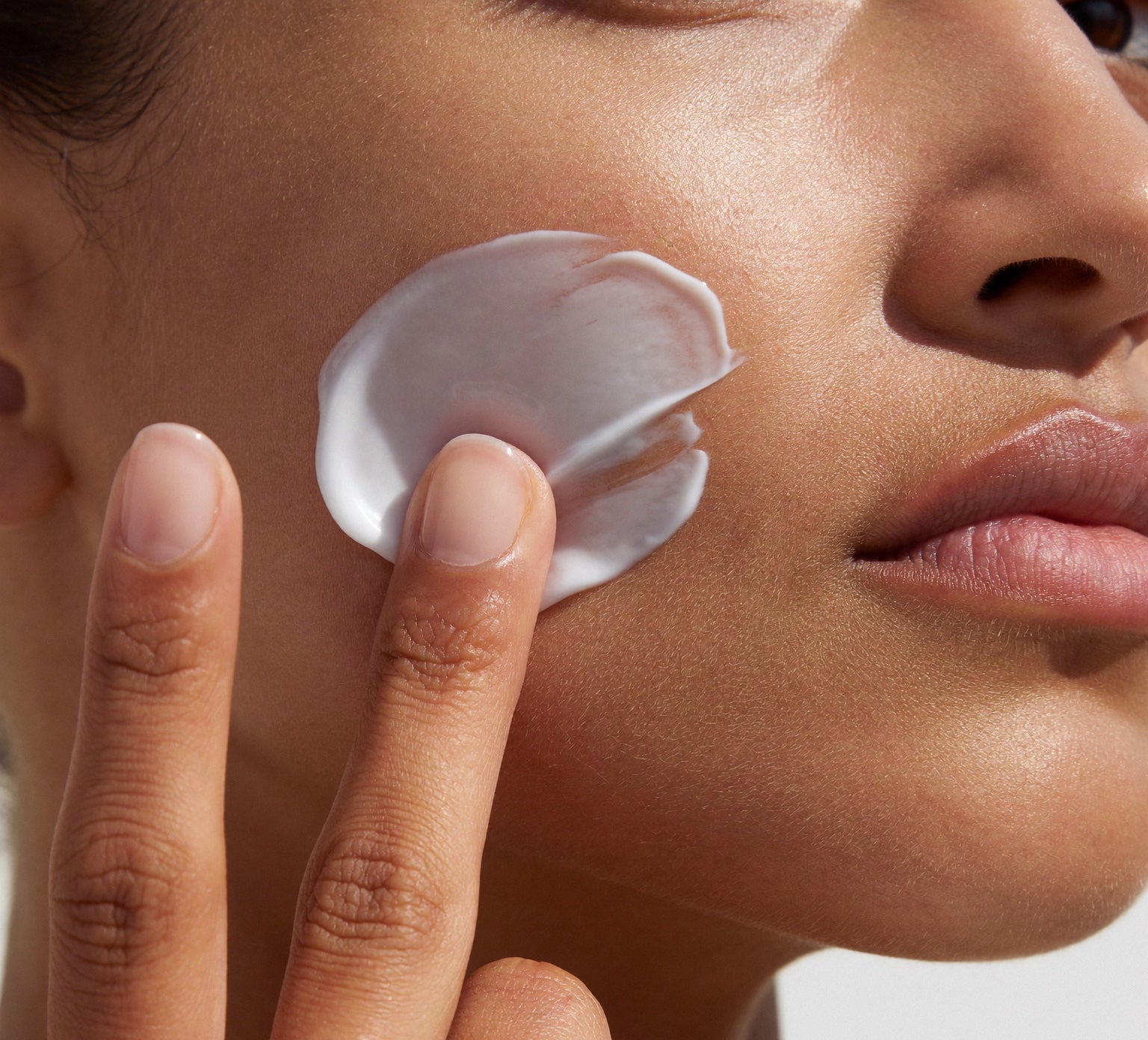
How Halo does both jobs at home, for a fraction.
Halo Face Cream is built for exactly this problem, and it goes after the same things the clinic does: fuller cheeks and smoother skin. It does two jobs at once, because fat loss causes two problems:
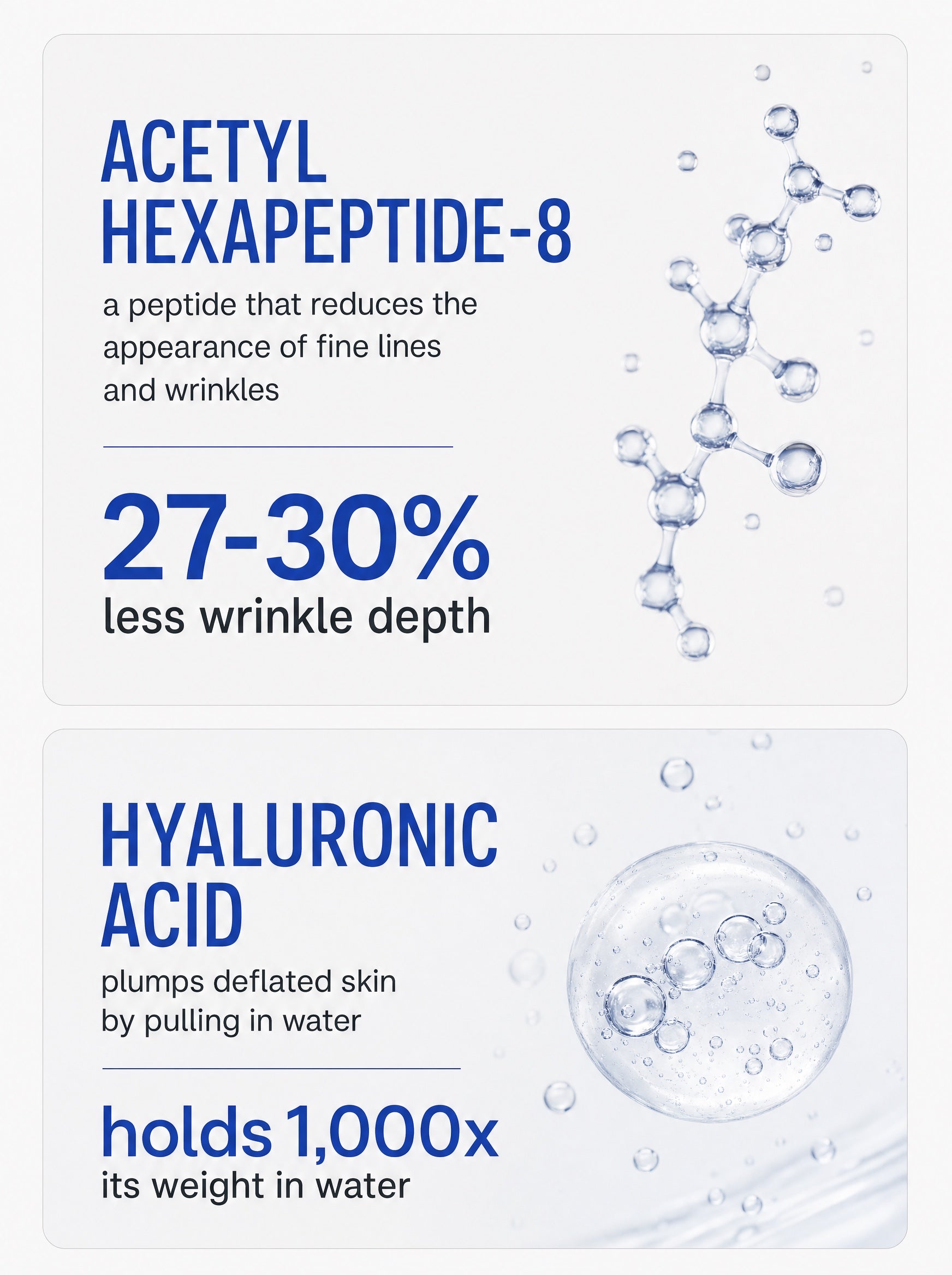
- Hyaluronic acid pulls water deep into the skin and holds it there, plumping a flat cheek back out so the face looks fuller.
- Acetyl Hexapeptide-8, a peptide, reduces the appearance of the fine lines and wrinkles that show up as the fat goes.
Aloe and jojoba keep it gentle and absorbing clean, with no grease. It is one light layer in the morning and one at night, about two minutes a day.
It works differently from the clinic. Instead of injecting volume, it plumps the skin itself and smooths the surface, so the result you see is the same fuller, smoother, more rested-looking face, without the appointments, the recovery, or the price tag.
The proof behind it, and the 60-day guarantee if it doesn't work for you.
There is no plastic surgeon and no 29-person study here. But both ingredients are among the most-studied in skincare:
- In published research, Acetyl Hexapeptide-8 reduced wrinkle depth by roughly 27 to 30% over about 30 days of twice-daily use.
- Hyaluronic acid holds up to about 1,000 times its weight in water, with studies reporting large jumps in skin hydration over a few weeks.
Halo is upfront that those are studies of the ingredients, not of this exact cream, which is rare in this category.
It is backed by a 60-day money-back guarantee. Use it for two months. If the cheeks do not look fuller and the lines do not look softer, email for a full refund and keep the jar. That is how the guarantee is built.

How your face will look, and how you'll feel, after a few weeks.
Here is what to actually expect. In the first week or two, the skin looks more hydrated and the cheeks look a little less flat. Around week four, the hollows under the eyes look less deep, the fine lines look softer, and the face looks fuller and more rested. With daily use, it keeps improving.
The part that tends to matter most does not happen in the mirror. The weight-loss win you worked so hard for finally starts to show on your face too, and the people closest to you start to notice. For a lot of women, the moment it becomes real is when a partner who had quietly stopped looking catches their eye again and says they look happy, without being told a thing had changed.
That is the part that is hard to put a number on, and it is the reason this is worth starting.
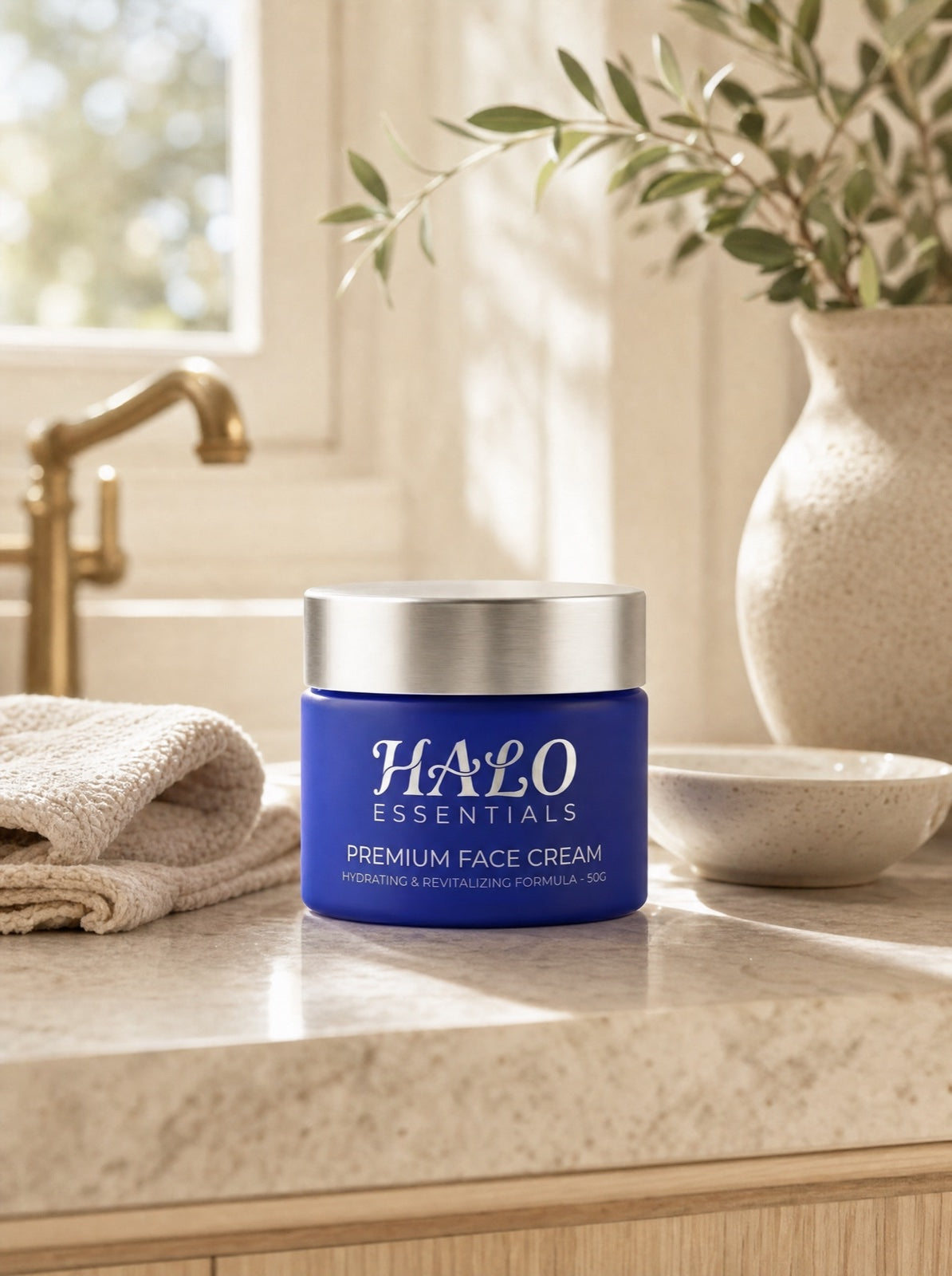
The one that works like the clinic, in two minutes a day at home.
Of everything on this list, one option gets you the same fuller, smoother look the clinic charges thousands for, without leaving your bathroom: Halo Face Cream. A peptide and hyaluronic acid, one light layer morning and night. About two minutes a day.
And there is no reason to wait until the cheeks fall and the lines set in further. Your skin is changing right now, as the weight comes off, so the best time to start is now. Use it for 60 days, and if your cheeks do not look fuller and your skin does not look smoother, you get your money back and keep the jar.
Try Halo Face Cream risk-free for 60 days
A peptide plus hyaluronic acid that plumps deflated skin, fills out flat cheeks, and reduces the appearance of fine lines and wrinkles. The same fuller, smoother look the clinic charges thousands for, at home in two minutes a day. If your cheeks don't look fuller and your skin doesn't look smoother, you get your money back and keep the jar.